Algae cooking oil
How to Cook With Algae Oil: A Practical Kitchen Guide
By the editorial team · Updated 2026-11-25 · Every number linked to its source
Quick answer. Use algae oil wherever you would use a neutral cooking oil: searing, roasting, stir-frying, baking and mayonnaise-style dressings. It swaps one for one with canola or vegetable oil. The brand claims a smoke point of up to 535°F 2, but no independent test has been published, so cook by what you see in the pan.
Which oil for this job?
Choose how you are cooking tonight, and the oil picker suggests suitable oils with their smoke points and the source behind each figure.
Our kitchen guidance, based on smoke point, stability and flavor. 3
Want it on paper? The Cooking Oil Guide has all 15 oils on one printable page, with best uses and recipes.
Learning how to cook with algae oil takes about one meal. It behaves like other neutral, refined oils, so most of what you already know carries over. The differences are small but useful: a very mild flavor that stays out of the way, a fat profile dominated by oleic acid and a high claimed smoke point. Below you will find what it tastes like, how it performs with each cooking method, how to swap it into recipes written for other fats and four simple recipes we use to get to know a new oil.
What algae oil tastes like
Algae Cooking Club describes the flavor as light, neutral and just a little buttery, with a faint hazelnut note and a clean mouthfeel 7. The original Thrive algae oil was described by its maker in 2015 as very neutral and very light 8. Both descriptions come from the companies, so taste a spoonful yourself before you build a dish around it.
What the oil does not taste like is the sea. It comes from microalgae grown in tanks and is refined like other plant oils, so a fishy smell is not expected. The brand itself says it is not a finishing oil 2: when you want the oil to be the flavor, as in a drizzle over tomatoes or bread for dipping, extra virgin olive oil or toasted sesame oil will do more.
How to cook with algae oil, method by method
Searing and stir-frying. These are the jobs algae oil is marketed for. The brand claims a smoke point of up to 535°F 2, while the earlier Thrive oil was quoted at 485°F 9. Neither figure comes with a published test method. In practice, heat the pan first, add a thin film of oil and add the food as soon as the oil shimmers. If it smokes, the pan is too hot for any oil; pull it off the heat for a moment.
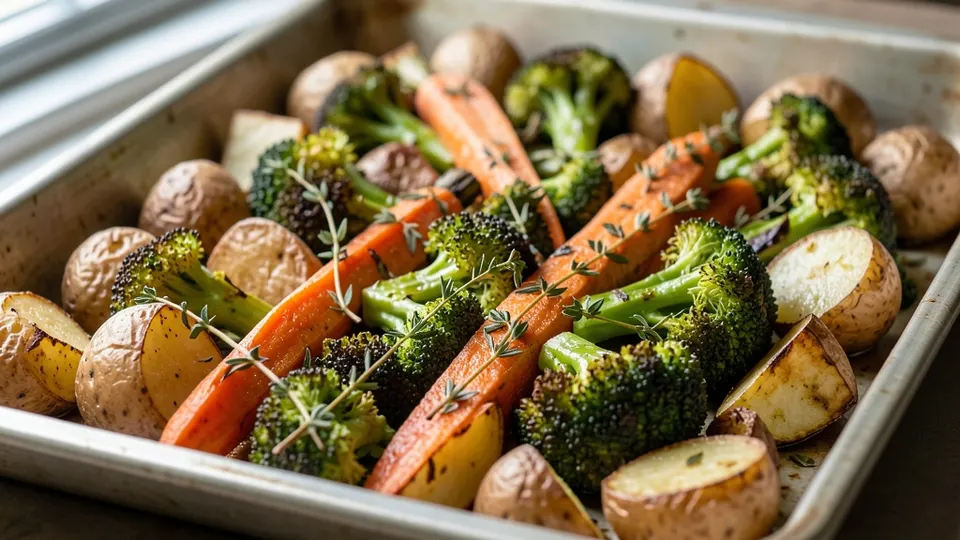
Roasting. Toss vegetables or potatoes in a light coat of oil and roast as usual. The neutral flavor lets herbs, garlic and spices lead.
Shallow and deep frying. Oils low in polyunsaturated fat tend to hold up better during long heating. In one lab study, polyunsaturated-rich oils such as canola, grapeseed and sunflower were less stable under prolonged heating than high-oleic peanut oil and extra virgin olive oil, and smoke points dropped as oil was reheated 3. Algae oil is high in oleic acid and low in polyunsaturated fat, which points in its favor, but it has not been tested in that study. Whatever oil you use, keep the temperature steady and replace oil that darkens or smokes early.
Baking. Its mild taste suits cakes, muffins, quick breads and brownies that call for liquid oil. It does not replace solid fats in recipes that depend on creaming butter or cutting cold fat into flour, such as pie crust or shortbread.
Dressings, mayonnaise and dips. Because it does not compete with other flavors, algae oil works well in aioli, homemade mayonnaise, vinaigrettes and blended dips such as pesto or hummus, uses the brand also suggests 7. Many cooks blend it with a little extra virgin olive oil for more flavor.
For how algae oil compares with other oils at high heat, see our chart of high smoke point oils and the details on the algae oil smoke point.
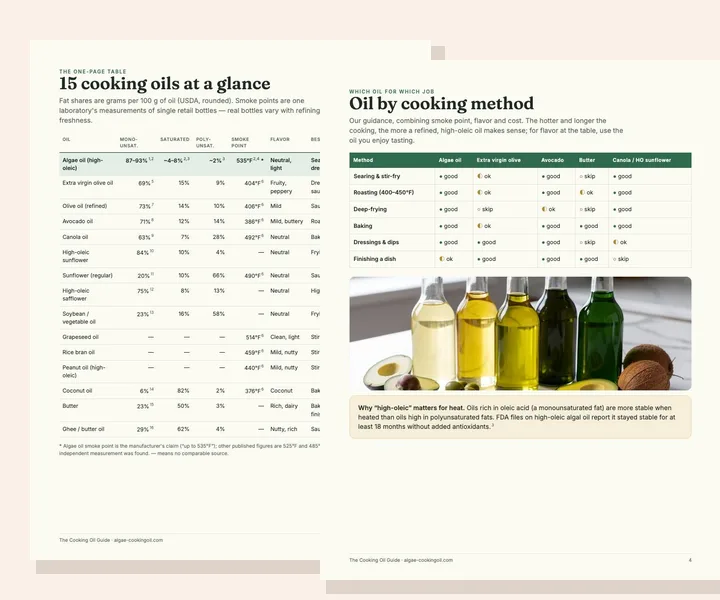
Free printable guide · 14 pages
Get The Cooking Oil Guide
The Cooking Oil Guide includes an oil-by-cooking-method chart for your fridge door and six simple recipes, from weeknight sears to oil-based baking.
- 15 oils on one page: fats, smoke points, best uses
- Which oil for searing, roasting, frying, baking, dressings
- Algae oil facts and open questions, with sources
- Label checklist, storage notes, 6 recipes · US Letter and A4
Swapping algae oil into recipes
Most swaps are simple. Our rule of thumb, based on how these fats behave in the kitchen:
| Recipe calls for | Swap with algae oil |
|---|---|
| Canola, vegetable or sunflower oil | Same amount |
| Olive oil for cooking | Same amount; less olive flavor |
| Melted butter | About four parts oil for five parts butter |
| Coconut oil, melted | Same amount, if the recipe uses it liquid |
| Solid butter or shortening | Not a direct swap |
The butter ratio comes from composition: unsalted butter is about 81 g fat per 100 g, the rest mostly water 10, while oil is nearly all fat. Using slightly less oil keeps the total fat close to the original recipe. Expect a lighter flavor and, in baked goods, a slightly moister crumb.
Four simple algae oil recipes
These are our own everyday recipes, written to show the oil at work rather than to impress. Quantities serve two to four.
1. Pan-seared chicken thighs with lemon. Pat 4 boneless chicken thighs dry and season with salt and pepper. Heat a heavy skillet over medium-high heat, add 1 tablespoon algae oil and lay the thighs in, skin side or smooth side down. Leave them for 6 to 7 minutes until browned, turn and cook until done through. Rest for a few minutes, then squeeze over half a lemon.
2. Sheet-pan roasted vegetables. Heat the oven to 425°F. Cut 2 pounds of mixed vegetables, such as carrots, broccoli, red onion and sweet potato, into even pieces. Toss with 2 tablespoons algae oil, 1 teaspoon salt and a pinch of chili flakes. Spread out on a sheet pan and roast for 25 to 35 minutes, turning once, until edges are browned.
3. Garlic aioli. In a tall jar, combine 1 pasteurized egg yolk, 1 small grated garlic clove, 1 teaspoon lemon juice and a pinch of salt. Blend with a stick blender while slowly adding 3/4 cup algae oil until thick. Taste and adjust with more lemon. Keep refrigerated and use within a few days.
4. One-bowl banana muffins. Heat the oven to 350°F. Mash 3 ripe bananas, then whisk in 1/3 cup algae oil, 1 egg, 1/2 cup brown sugar and 1 teaspoon vanilla. Stir in 1 1/2 cups flour, 1 teaspoon baking soda and a pinch of salt just until combined. Divide among 12 lined muffin cups and bake for 18 to 22 minutes, until a toothpick comes out clean.
We do not list nutrition figures for these recipes, because algae oil has no USDA entry and the published fat figures for it disagree.
Keeping your oil fresh between meals
Store the bottle away from the stove and out of direct light, with the cap tightly closed. A retailer listing suggests finishing an opened bottle inside 12 months 11. If it starts to smell like crayons, paint or stale nuts, it has gone rancid and will taste that way in food. Our page on how to store algae oil covers shelf life, the fridge question and reusing frying oil.
Helpful in the kitchen
As an Amazon Associate we earn from qualifying purchases. Optional; nothing on this page needs it.
Holds heat for a proper sear, which is where a high smoke point oil earns its keep.
See it on Amazon ↗A thin, even layer for roasting and air-frying, using less oil.
See it on Amazon ↗Frequently asked questions
Does algae cooking oil taste fishy?
No, it should not. Culinary algae oil is made from microalgae grown in fermentation tanks and then refined, so it carries none of the fish or seaweed character of omega-3 supplements. The brand describes it as light, neutral and slightly buttery. If your bottle smells fishy or like paint, it may have oxidized, or you may have a supplement-type product rather than cooking oil.
Can you use algae oil for baking?
Yes. Use it one for one in any recipe that calls for a neutral liquid oil, such as muffins, quick breads, oil-based cakes and brownies. Its mild flavor does not show through. It is not a direct replacement for solid butter or shortening in recipes that rely on creaming or flaky layers. For melted butter, use slightly less oil, roughly four parts oil for five parts butter.
Is algae oil better than olive oil for cooking?
It depends on the dish. Algae oil is more neutral in flavor and has a higher claimed smoke point, which suits searing and frying. Extra virgin olive oil brings flavor and has a long research record, and it handled prolonged heating well in a lab study 3. A practical pantry has room for both, with each used where its strengths show.
What is the unhealthiest oil to fry with?
Rather than naming one oil, look at two things. Oils high in polyunsaturated fat break down faster under long heating, and oil that is reused many times smokes at lower temperatures, according to a lab study of commercial oils 3. Fats high in saturated fat, such as coconut oil and butter, raise other health questions. Fresh, high-oleic oil at a steady temperature is the safer pattern.
Is algae oil unhealthy?
Nothing in the published safety reviews suggests so. The FDA reviewed high-oleic algal oil as a food ingredient and had no questions, and Health Canada called the oils as safe and nutritious as other food oils 12. Like any oil it is calorie-dense, and its benefits depend on what it replaces. The brand's exact strain and manufacturer are not public, which is a transparency gap.
Sources
- U.S. FDA (notifier dossier by Burdock Group for TerraVia/Corbion), 2017: GRAS Notice (GRN) No. 754: Notification of GRAS Status of High-Oleic Algal Oil
- Algae Cooking Club, 2026: Algae Cooking Oil | Top Seller (product page)
- Acta Scientific Nutritional Health 2(6):02-11 (De Alzaa F, Guillaume C, Ravetti L; Modern Olives Laboratory Services, Australia), 2018: Evaluation of Chemical and Physical Changes in Different Commercial Oils during Heating
- USDA FoodData Central (SR Legacy), 2019: Oil, sunflower, linoleic, (approx. 65%) (FDC 171025)
- USDA FoodData Central (SR Legacy), 2019: Oil, safflower, salad or cooking, high oleic (FDC 171027)
- USDA FoodData Central (SR Legacy), 2019: Oil, soybean, salad or cooking (FDC 171411)
- Algae Cooking Club, 2026: FAQ (answers embedded in page data)
- FoodNavigator-USA, 2015: Solazyme unveils Thrive, the first culinary algae oil in the market and its first consumer food brand
- Nutritional Outlook (J. Grebow), 2015: Will consumers accept algal oil as a cooking substitute?
- USDA FoodData Central (SR Legacy), 2019: Butter, without salt (FDC 173430)
- GroceryeShop (retailer listing), 2026: Algae Cooking Club Chef-Grade 100% Algae Cooking Oil
- Health Canada, 2023: Novel Food Information: High Oleic Algae Oils from Prototheca moriformis strains S2532 and S6697